Not all hair loss treatments are created equal. Some have decades of randomized controlled trial data. Others have marketing budgets. Here's the complete landscape, ranked by strength of evidence.
Tier 1: Strong Clinical Evidence
Finasteride is the gold standard pharmaceutical — inhibits Type 2 5-alpha-reductase, reducing scalp DHT by ~60%. Sexual side effects in 1–2% of users. Available as oral tablets or topical formulations like Procerin Rx (topical finasteride + minoxidil with lower systemic exposure).
Minoxidil extends the growth phase and improves follicular blood supply. FDA-approved since 1988. Most effective for crown thinning. Doesn't address DHT — treats symptom, not cause.
Hair transplant surgery (FUE/FUT) permanently relocates DHT-resistant follicles. The only option that truly restores hair in bald areas. $4,000–$15,000+. Requires ongoing DHT management post-surgery.
Tier 2: Moderate Clinical Evidence
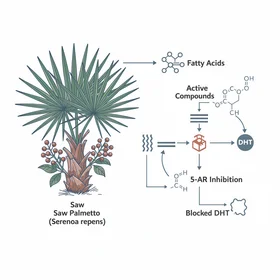
Natural DHT blockers — saw palmetto, beta-sitosterol, pumpkin seed oil. Lower potency than finasteride but no sexual side effects. Combination products like Procerin (which stacks multiple compounds + topical) outperform single ingredients and have IRB-approved clinical data.
PRP (Platelet-Rich Plasma) — Growing evidence, but small studies, no standardized protocol, expensive ($500–$2,000/session).
Tier 3: Weak or No Evidence
- Biotin — No effect unless you have a deficiency (rare). The most overhyped ingredient in hair loss.
- Laser caps/combs — FDA-cleared (low bar), limited evidence, expensive.
- Hair growth shampoos — Contact time too short for meaningful absorption. Exception: ketoconazole has mild anti-androgenic properties as an adjunct.
- Essential oils, scalp massage — No clinical evidence for androgenetic alopecia.
Choosing by Stage
| Stage | Recommended Approach |
|---|---|
| Early (Norwood I–II) | Natural DHT management (Procerin OTC) + monitoring. Low risk, addresses the cause early. |
| Moderate (Norwood III–IV) | DHT blocker + minoxidil. Consider Procerin Rx (topical finasteride + minoxidil) for prescription strength with lower systemic exposure. |
| Advanced (Norwood V+) | Maximum medical therapy + transplant consultation. Set realistic non-surgical expectations. |
How to Get Started With Hair Loss Treatment
Getting started can feel overwhelming. Here is a step-by-step process to move from noticing hair loss to choosing the right treatment:
- Step 1: Confirm the cause. Most male hair loss is androgenetic alopecia (DHT-driven), but rule out other causes — thyroid issues, iron deficiency, stress-related shedding, or medication side effects. A dermatologist can confirm the diagnosis.
- Step 2: Assess your stage. Compare your pattern to the Norwood scale (I-VII). Take photos in consistent lighting from the front, top, and both temple angles. Your stage determines which treatments are most effective.
- Step 3: Start with the lowest-risk approach. For early-stage loss (Norwood I-III), a natural DHT blocker like Procerin is a reasonable starting point. For moderate loss, consider adding minoxidil or exploring prescription options.
- Step 4: Commit to 90 days minimum. No hair loss treatment produces visible results in under 3 months. Set a calendar reminder to evaluate progress with comparison photos at 90 days.
- Step 5: Evaluate and adjust. If your initial approach isn't producing results after 6 months of consistent use, escalate — add minoxidil, switch to prescription finasteride, or consult a dermatologist about combination therapy.
Alternatives to Consider
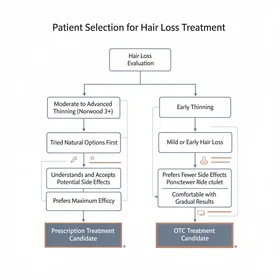
No single treatment is right for everyone. Here are the main alternatives worth evaluating instead of — or alongside — your primary approach:
- Natural supplements vs. prescription drugs — If you're concerned about finasteride side effects, natural DHT blockers are a valid alternative with a cleaner safety profile, though less potent.
- Topical vs. oral finasteride — Topical finasteride (as in Procerin Rx) is an alternative to oral finasteride that reduces systemic absorption while maintaining scalp-level DHT reduction.
- Minoxidil alone — An alternative for men who want to avoid any DHT-modifying treatment. Less effective for the underlying cause, but can improve density through a different mechanism.
- Surgical transplant — The only permanent alternative for restoring hair in bald areas. Best for men at Norwood IV+ with stable loss and sufficient donor hair.
- Combination therapy — Pairing a DHT blocker with minoxidil produces the highest efficacy (94.1%). An alternative to relying on any single treatment.
- No treatment — A legitimate option. Hair loss is cosmetic, not medical. Some men prefer acceptance over ongoing treatment.
For a deeper dive into how DHT specifically drives follicle miniaturization — and why blocking it is the foundation of every effective treatment — how DHT causes hair loss covers the mechanism in detail.