
Every effective hair loss treatment — from prescription finasteride to natural saw palmetto — targets the same pathway. Understanding that pathway is the foundation for making smart treatment choices.
Testosterone → DHT → Miniaturization
Your body converts testosterone to dihydrotestosterone (DHT) via the enzyme 5-alpha-reductase. DHT is 3–5x more potent than testosterone at binding androgen receptors. In genetically susceptible follicles — primarily along the hairline and crown — DHT triggers progressive miniaturization.
Each growth cycle, affected follicles produce thinner, shorter, lighter hair. Eventually the follicle produces only microscopic vellus hair, then goes dormant. Once dormant, no current treatment can reactivate it.
Why Genetics Matter
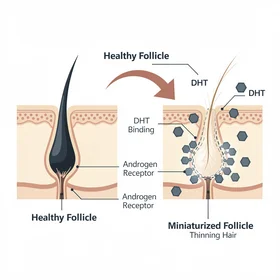
Two men with identical DHT levels can have completely different outcomes. The difference is how their follicle androgen receptors are genetically programmed to respond. This sensitivity is polygenic — influenced by genes from both parents. The androgen receptor gene on the X chromosome (maternal) is significant, but paternal genetics matter too.
The Timing Imperative
Treatments work by preserving and revitalizing follicles that are still functioning. A miniaturized follicle producing fine vellus hair is still alive and can potentially recover. A fully dormant follicle cannot.
The single most important variable in hair loss treatment isn't which product you choose — it's how soon you start. Every month of delay is follicles crossing from recoverable to non-recoverable.
What This Means for Treatment
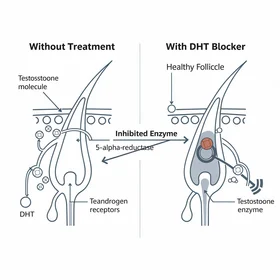
All effective treatments target some part of this pathway:
- 5-AR inhibitors (finasteride, saw palmetto) reduce the conversion of testosterone to DHT
- Androgen receptor blockers (beta-sitosterol) compete with DHT at the follicle receptor
- Growth stimulators (minoxidil) bypass DHT entirely and stimulate follicle activity directly
- Combination approaches address multiple points in the pathway simultaneously
The strongest results come from combining DHT reduction with growth stimulation — which is why the combination data (94.1% improvement) dramatically outperforms any single treatment. For a step-by-step guide on how to get started, see our treatment rankings page. If you prefer a natural approach, our natural options guide covers which compounds have real clinical evidence.